





Introduction: Da Nang, Where the City Meets the Sea
After exploring Hoi An through its lantern-lit streets, craft traditions, countryside villages and slower rhythm of life, it is easy to imagine Central Vietnam as a place that invites you to pause. Da Nang offers a different side of the same region. Here, the pace becomes more dynamic, the coastline opens into a modern urban landscape, and the sea is not simply a backdrop for a holiday but part of everyday city life.
Da Nang is one of Vietnam's major coastal cities, shaped by the Han River, the East Sea and the mountains that surround it. Wide beaches sit close to hotels, restaurants, cafés and residential neighbourhoods, while an international airport makes the city one of the most convenient gateways to Central Vietnam. The combination gives Da Nang an unusual character: it feels unmistakably urban, yet the beach and natural landscapes are never far away.

That is also what makes Da Nang particularly interesting for travellers who want more than a short sightseeing stop. The city can be enjoyed for a few days, used as a comfortable base for exploring the surrounding region, or simply experienced at a slower pace by travellers who appreciate having the conveniences of a large city close to the sea. Hoi An remains only a short journey away, while Ba Na Hills, Son Tra Peninsula and the Marble Mountains add completely different landscapes to the same itinerary.
1. Da Nang Vietnam: A City Designed Around the Coast
Da Nang is easiest to understand when the city and the coastline are considered together. The Han River divides the urban centre from the beach districts, while the coastline stretches for kilometres between the Son Tra Peninsula and the direction of Hoi An. Along this coastal landscape, hotels and resorts stand alongside seafood restaurants, cafés, local neighbourhoods and public spaces used by residents every day.
This creates a different kind of beach destination from one built almost entirely around resorts. In Da Nang, the sea is woven into the rhythm of the city. Early in the morning, residents head to the beach to swim, exercise or simply watch the day begin. Later, the same coastline becomes a place for walking, dining and enjoying the evening, with restaurants and rooftop venues looking back towards the water and the city. Vietnam Tourism describes this particularly well in its account of My Khe, where the beach remains part of the everyday life of local residents rather than being reserved exclusively for visitors.

The city's practical advantages are just as important. Da Nang International Airport is close to the urban centre and has both domestic and international terminals, while trains, buses, taxis and ride-hailing services make movement around the city relatively straightforward. From Da Nang, excursions to Hoi An, the Marble Mountains, Son Tra Peninsula and Hai Van Pass can also be arranged easily, giving the city a useful role as a travel hub for Central Vietnam.
For international travellers, this combination of accessibility and lifestyle changes the way Da Nang can be used in an itinerary. It does not have to be a city that clients simply pass through on their way to another destination. It can be a place where they settle into a hotel, enjoy the beach in the morning, explore the city in the afternoon and still have the option of discovering another part of Central Vietnam the following day.
2. From Hoi An to Da Nang: Two Different Ways to Experience Central Vietnam
The relationship between Da Nang and Hoi An is one of the most useful features of a Central Vietnam itinerary. The two destinations offer distinctly different experiences, but they are close enough to complement one another rather than compete for the same role.

Hoi An is intimate and atmospheric. Its heritage architecture, lanterns, traditional crafts, countryside villages and surrounding rice fields create a setting where the pleasure often comes from slowing down and spending time in one place. Da Nang, by contrast, feels more contemporary. Its beaches, cafés, restaurants, residential areas, nightlife and larger hospitality infrastructure give travellers more of the energy and convenience associated with a major city. The contrast is not a reason to choose one over the other. It is precisely what makes combining them so effective.
The logistics are equally straightforward. Da Nang International Airport is around 29 kilometres from Hoi An Ancient Town, according to Vietnam Tourism, and the journey by road is generally easy to arrange. This means travellers can stay in Da Nang and explore Hoi An as part of a day trip, or stay in Hoi An and come into Da Nang for selected experiences without creating a complicated transfer between destinations.
For a DMC, this proximity also creates room to design the itinerary around the traveller rather than around a fixed sequence of destinations. A client looking for a more relaxed beach stay may spend several nights in Da Nang and visit Hoi An for its heritage and local atmosphere. Another may prefer the intimacy of Hoi An while using Da Nang for its airport access, beaches or wider choice of services. The two places can therefore form different parts of the same Central Vietnam story, each contributing something the other does not.

3. Da Nang Beaches: A Modern Beach Experience
3.1 My Khe Beach and the Urban Coast
The beaches are among the first things that define Da Nang, but their appeal goes beyond the familiar image of white sand and blue water. My Khe is particularly interesting because of its relationship with the city behind it. The beach is broad and open, yet it is only minutes from hotels, restaurants, cafés and urban neighbourhoods, creating an experience that feels both coastal and distinctly metropolitan.
The rhythm of the beach changes throughout the day. Early mornings bring residents to the shore for swimming, jogging and exercise, while the late afternoon sees the coastline become more social as people return to the water after the heat of the day. This everyday use gives My Khe a sense of place that a purely resort-oriented beach can sometimes lack. A traveller can spend the morning by the sea and, without travelling far, move into the city for lunch, coffee, shopping or an evening meal.
For clients, that flexibility can be particularly valuable. A beach day in Da Nang does not have to mean spending the entire day inside a resort. The coastline can become part of a broader city experience, allowing travellers to move naturally between relaxation and exploration without sacrificing either.
3.2 More Than a Resort Beach
Da Nang does have an established luxury hospitality scene, including major beachfront resorts, but the city's beaches remain closely connected to local life. Vietnam Tourism notes that much of the beach continues to function as a playground, gym and source of livelihood for residents, which helps explain why the coastline feels active rather than isolated from the city.

This is one of Da Nang's strongest qualities for longer stays. A traveller does not need a major excursion every day to enjoy the destination. There is enough around the beach to create a comfortable daily rhythm: a morning swim, breakfast overlooking the coast, a few hours exploring the city, perhaps an afternoon café, and an evening by the river or sea. The destination works because ordinary moments can become part of the holiday rather than simply filling the time between major attractions.
3.3 Other Coastal Areas
My Khe may be the best-known beach, but it is part of a much longer coastal landscape. Pham Van Dong lies close to the central beach districts, while Non Nuoc extends towards the southern side of the city and the Marble Mountains. Together with other stretches of coastline and the beachfront resort areas further south, they give Da Nang a wide range of settings for different styles of stay.
The important point is not to choose one beach as the definitive experience of Da Nang. The coastline works as a continuous part of the destination, changing in character as the city gives way to resort areas, mountains and the road towards Hoi An. For a tailor-made itinerary, that makes it possible to match the location and atmosphere of a stay with the client's priorities rather than treating the beach as a single attraction.

4. Ba Na Hills and the Golden Bridge: Da Nang's Global Icon
4.1 The Golden Bridge
If Da Nang's beaches define its relationship with the sea, the Golden Bridge has become the city's most recognisable image in the mountains. Suspended above the landscape at Ba Na Hills and held by two enormous stone-coloured hands, the bridge became an international sensation after opening in 2018, turning an already established mountain destination into one of Vietnam's most widely photographed attractions.
The appeal of the Golden Bridge lies partly in its unusual relationship with its surroundings. Rather than crossing a river or connecting two urban structures, it appears above the forested mountain landscape, creating an image that is immediately different from the architecture visitors normally associate with Vietnam. On clear days, the elevated position also opens views towards the surrounding mountains and, from the cable-car journey, towards Da Nang and the sea.
For many international travellers, the Golden Bridge is the image that first brings Da Nang to mind. Yet the bridge works best when understood as part of the much larger Ba Na Hills experience rather than as an isolated photo stop.

4.2 Ba Na Hills Beyond the Bridge
Ba Na Hills combines mountain scenery with a deliberately constructed European-inspired environment. The destination began as a French hill station in 1919 and today includes extensive cable-car systems, gardens, the French Village, entertainment areas and other attractions spread across the mountain. The journey itself is part of the experience, taking visitors away from the tropical coastal environment into a cooler mountain setting.
That change of atmosphere is one of the reasons Ba Na Hills fits so naturally into a Da Nang itinerary. Within the same day, travellers can move from the heat and openness of the coast to mountain air, mist, gardens and panoramic views. The contrast is especially noticeable when the city is visible below from the cable car, reminding visitors how quickly Da Nang's landscapes change once the road begins to climb.
The French Village adds another layer to the experience, with stone buildings, a central square, a cathedral and cafés creating an environment that feels deliberately removed from the tropical city below. It is a highly designed attraction rather than a traditional Vietnamese village, and it should be presented as such. Its value lies in the change of scenery and atmosphere, particularly for families and travellers who enjoy combining landscape, architecture and entertainment in one excursion.

4.3 Why It Works in an Itinerary
From a DMC perspective, Ba Na Hills is valuable not simply because the Golden Bridge is famous, but because it introduces a completely different landscape into a coastal itinerary. After days shaped by beaches, seafood, city streets and the warmth of Central Vietnam, a mountain excursion creates a natural change of pace and temperature.
This makes the experience more than a famous photograph. Da Nang can offer the sea and the city, while Ba Na Hills adds altitude, mountain scenery and a distinctly different environment within the same destination. For clients travelling through Central Vietnam, that variation can help create an itinerary that feels more layered without requiring a long transfer to another region.
5. Beyond the Beach: Mountains, Nature and Cultural Landscapes
Da Nang's identity would feel incomplete if it were reduced to its beaches. One of the city's most distinctive qualities is the way urban life sits between several very different landscapes. To the north-east, the forested Son Tra Peninsula reaches into the sea. To the south, the limestone formations of the Marble Mountains rise along the road towards Hoi An. In the centre, the Han River cuts through the city, surrounded by bridges, restaurants, cafés and an increasingly lively evening scene. In a relatively compact area, travellers can therefore move from the beach to the forest, from mountains to cultural sites, and from quiet natural landscapes back into the energy of the city.

5.1 Son Tra Peninsula
Son Tra offers perhaps the clearest reminder that Da Nang is not simply a modern coastal city. Located only around 10 kilometres north-east of the centre, the peninsula rises directly from the sea and is covered by a large area of forest. Its highest point reaches about 696 metres, while the roads leading through the peninsula open towards views of Da Nang, the Han River, the coastline and the surrounding mountains.
The natural environment is an important part of Son Tra's character. The peninsula is home to a rich variety of plant and animal species, including the rare red-shanked douc langur, and its forested slopes create an unusually wild setting so close to the city. At Linh Ung Pagoda, the white Lady Buddha statue looks out towards the sea, while viewpoints further up the peninsula offer a different perspective on Da Nang below.
What makes Son Tra particularly valuable in an itinerary is not simply the attraction itself, but the change it creates. A traveller can leave a beachfront hotel in the morning and, within a relatively short drive, find themselves surrounded by forest, sea views and mountain roads. It is a completely different experience from walking through the urban centre, yet it remains part of Da Nang rather than requiring a separate journey to another destination.

5.2 Marble Mountains
Further south, the Marble Mountains provide another transition between nature, culture and the road towards Hoi An. The site consists of five limestone and marble mountains named after the five elements, with Thuy Son being the most visited. Within the karsts are caves, grottoes, pagodas, shrines and viewpoints overlooking the surrounding landscape. The site has held spiritual significance for centuries and brings together natural formations and religious heritage in a way that is particularly characteristic of Central Vietnam.
Marble Mountains also work naturally within a wider journey rather than only as a standalone excursion from Da Nang. Their position on the southern side of the city makes them a logical stop when travelling between Da Nang and Hoi An, allowing an itinerary to move gradually from the modern coastal city towards the cultural landscapes of the region. Vietnam Tourism itself places Marble Mountains within this wider Da Nang to Hoi An route.

5.3 The Han River and Da Nang at Night
If the beach shows Da Nang's relationship with the sea, the Han River shows its relationship with urban life. The riverfront is one of the most recognisable parts of the city, with bridges, cafés, restaurants and illuminated buildings creating a very different atmosphere after sunset. Dragon Bridge has become one of the city's symbols, while evening river cruises offer another way to experience the skyline and the waterfront.
This is also where Da Nang feels most clearly like a contemporary Vietnamese city rather than a conventional beach resort. Visitors can spend the day by the sea or in the mountains and return to the centre for dinner, coffee, shopping or an evening walk along the river. On selected nights, the Dragon Bridge's fire and water show adds another distinctly urban experience to the city after dark.
That combination gives Da Nang a useful depth. The destination does not shut down when the beach day ends. The riverfront, restaurants, cafés and nightlife allow the city to continue as part of the experience, making a stay feel more like a city break with a coastline than a traditional resort holiday.

6. Why Da Nang Has Become a Place to Stay, Not Just Visit
There is a reason Da Nang is often described as one of Vietnam's most liveable cities. Its appeal does not depend on a single attraction, but on the unusual combination of urban convenience, beaches, natural landscapes and access to the wider region. Vietnam Tourism has repeatedly highlighted this balance, describing Da Nang as a city where beaches, mountains, restaurants, cafés and everyday local life exist unusually close together.
For a traveller, this matters because a destination becomes different once there is no pressure to fill every day with major sightseeing. Da Nang has enough restaurants, cafés, shopping, beach activities, spas and leisure options to create a comfortable routine between excursions. The airport is close to the city, while trains and buses also connect Da Nang with other parts of Vietnam. Excursions to Hoi An, Son Tra, Marble Mountains and Hai Van Pass can be arranged without changing hotels, making the city particularly practical for travellers who prefer to unpack once and explore from a stable base.
Da Nang's appeal becomes clearer when the city is experienced not as a checklist of attractions, but as a place where a traveller can build a comfortable daily rhythm. A morning by the sea can be followed by lunch in the city, an afternoon excursion and an evening beside the Han River. The following day can be slower, perhaps with a spa treatment, a café, some shopping and dinner overlooking the coast. That flexibility is difficult to capture in a conventional sightseeing itinerary, but it is one of the reasons Da Nang can work particularly well for longer stays.

The city's development has also been accompanied by investment in urban technology and infrastructure. Da Nang received the highest Vietnam Smart City Award in 2024, and government reporting notes that the city subsequently continued its recognition in the 2025 awards, alongside other smart-city distinctions. These awards do not by themselves determine whether a city is enjoyable to live in, but they provide another indication of the city's broader development beyond tourism.
For the travel industry, this creates an important distinction. Da Nang can be sold as a destination for a few nights, but it can also be designed as a place where clients stay longer without feeling that they have run out of things to do. That makes it particularly useful for beach extensions, family holidays, wellness-oriented stays and itineraries where comfort and flexibility matter as much as sightseeing.
7. An Internationally Recognised Destination
Da Nang's growing international profile can be seen not only in the number of travellers arriving in the city, but also in the attention it has received from international travel organisations and media. In 2022, Da Nang was named Asia's Leading Festival & Event Destination by the World Travel Awards. It was subsequently nominated again in 2024, 2025 and 2026, remaining part of the region's competitive festival and event tourism landscape even when the award went to another Vietnamese city.
International travel media have also increasingly looked at Da Nang as more than a conventional beach destination. Condé Nast Traveler included Da Nang among its 11 Best Places to Go in Asia for 2024, highlighting the city's combination of restored landmarks, regional food and upscale resorts. The same international attention extends into the hospitality sector: InterContinental Danang Sun Peninsula Resort, for example, has been repeatedly recognised by Condé Nast Traveler and was featured in its 2024 Asia selection.

These recognitions do not define Da Nang by themselves, and they should not replace the actual experience of the destination. What they do show is how the city has developed an international tourism profile that reaches beyond its coastline. Festivals, hospitality, gastronomy, nature and urban experiences now form part of the way Da Nang is presented to the international market.
For travel professionals, that wider reputation is useful because it allows the city to occupy several roles within a programme. It can support a luxury beach stay, a family holiday, a cultural itinerary, a MICE programme or a longer Central Vietnam journey without needing to be reduced to a single type of tourism.
8. Da Nang for Different Travel Styles
One of Da Nang's strengths is its flexibility. Families can combine spacious beaches and straightforward city facilities with attractions such as Ba Na Hills, while the relatively short distances between the coast, Son Tra and Marble Mountains make it possible to vary the pace without spending much of the holiday on the road. Ba Na Hills is also specifically presented by Vietnam Tourism as a family-friendly day outing, adding another option for travellers who want entertainment alongside the city's natural and cultural experiences.
For couples, Da Nang offers a different rhythm. A beachfront hotel can become the starting point for mornings by the sea, afternoons exploring the city or surrounding landscapes and evenings around restaurants, rooftop venues or the Han River. The proximity of Hoi An adds another dimension, allowing a couple to combine the atmosphere of an historic town with the broader range of contemporary hospitality available in Da Nang.

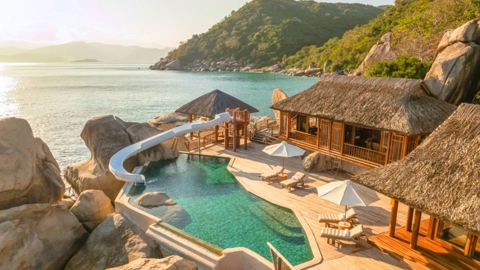
The city's hospitality infrastructure also makes it suitable for luxury travel. Beachfront resorts, private excursions, spa and wellness services, fine dining and tailor-made experiences can be combined without requiring clients to move between several destinations. On Son Tra Peninsula, for example, internationally recognised luxury hospitality sits directly within a forested coastal environment, illustrating how closely nature and high-end accommodation can coexist around Da Nang.
Long-stay travellers benefit from a different set of qualities. They may not need a new attraction every morning. Instead, the value lies in having a city with beaches, cafés, restaurants, leisure facilities and easy day trips all within reach. Cultural travellers can also use Da Nang as a starting point for Hoi An, My Son, Marble Mountains, Son Tra and further journeys towards Hue, creating a broader Central Vietnam experience without sacrificing the convenience of a well-connected urban base.
This flexibility is particularly useful for tailor-made travel. The same city can therefore serve very different clients, not because Da Nang tries to offer everything to everyone, but because its geography allows several types of experience to exist within a relatively manageable area.
9. Da Nang as a Base for Central Vietnam
Perhaps one of Da Nang's greatest advantages for itinerary design is that it can function as more than a destination in its own right. Its location allows travellers to use the city as a base while exploring several of Central Vietnam's most important landscapes and heritage sites. Hoi An can be reached easily by road, while Marble Mountains lie on the route towards the ancient town. Son Tra remains within the city area, and Hai Van Pass opens the journey north towards Hue. My Son can also be incorporated into a wider cultural programme.

This creates an important advantage for clients who value comfort. A well-designed Central Vietnam itinerary does not necessarily require changing hotels every night. Instead, travellers can establish themselves in Da Nang and use carefully chosen excursions to experience different sides of the region, returning to the same hotel at the end of the day.
That approach can be particularly effective for families, older travellers and higher-end clients, for whom excessive hotel changes may make an itinerary feel tiring rather than enriching. It also leaves more room for flexibility. If clients want another morning at the beach, a slower lunch, an afternoon spa treatment or additional time in Hoi An, the itinerary can accommodate those preferences without disrupting the entire route.
For a DMC, Da Nang therefore offers more than geographical convenience. It provides a stable base from which different experiences can be layered according to the client's interests, while the city itself remains part of the holiday rather than simply serving as a place to sleep between excursions.
10. How Long Should Clients Stay in Da Nang?
There is no single number of nights that works for every Da Nang itinerary. The right length depends on whether the city is being used primarily for its beaches, as a base for Central Vietnam, or as a destination where clients want time to enjoy the city itself.

With two days, travellers can experience the essential contrast between the coast and the city, adding one major excursion such as Ba Na Hills, Son Tra or Marble Mountains. Three days allow more breathing room, with time for the beach alongside city exploration and a mountain or cultural experience. Four days make it easier to include Hoi An without turning the stay into a constant sequence of departures and returns.
For five days or longer, the role of Da Nang can change again. Rather than feeling like an extended sightseeing stop, the city can become a genuine base for Central Vietnam, combining several excursions with unstructured time by the sea. This is also where Da Nang's lifestyle qualities become more noticeable: the pleasure comes not only from what clients visit, but from having enough time to enjoy where they are staying.
For tailor-made travel, this distinction is important. The goal is not to fill a predetermined number of days with attractions, but to decide how much time each client needs to experience Da Nang at the pace that suits them.
11. Da Nang and Hoi An: A Natural Combination
After spending time in Hoi An, arriving in Da Nang feels less like leaving one destination for another and more like changing the rhythm of the same Central Vietnam journey. Hoi An brings together heritage, crafts, countryside, local food and a slower atmosphere. Da Nang introduces a broader urban setting, a long coastline, contemporary hospitality and the practical advantages of a larger city.

That contrast is precisely what makes the two destinations work so well together. Travellers can spend an evening walking beneath Hoi An's lanterns, then return to a beachfront hotel in Da Nang the following day. They can move from village experiences and historic streets to cafés, modern restaurants, open beaches and a lively riverfront without travelling far between them.
For itinerary designers, this creates a useful balance between atmosphere and convenience. Hoi An gives the journey intimacy and cultural depth, while Da Nang provides space, infrastructure and a different kind of energy. Together, they allow Central Vietnam to feel varied without becoming geographically complicated.
Conclusion: Da Nang, a City to Visit, Then Perhaps Stay a Little Longer
Da Nang may first enter an itinerary because of its beaches or because clients want to see the Golden Bridge. But the longer one looks at the city, the more its appeal extends beyond those headline attractions. The coastline is woven into everyday urban life, mountains and forests sit surprisingly close to the centre, the Han River gives the city a distinctive evening atmosphere, and Hoi An remains within easy reach.

What makes Da Nang particularly versatile is the combination of urban convenience, beach lifestyle, natural landscapes and regional connectivity. It can be a beach destination, a comfortable long-stay city, a base for exploring Central Vietnam or simply the place where a traveller finds enough variety to slow down without feeling confined.
Vietnam Original Travel can design tailor-made Da Nang and Central Vietnam itineraries, combining beaches, city experiences, Ba Na Hills, Hoi An and other regional highlights according to each client's interests, pace and travel style.
FAQ
Is Da Nang worth visiting?
Da Nang offers more than a conventional beach holiday. Travellers can combine its coastline with city life, mountain landscapes, cultural sites, food, nightlife and excursions to Hoi An and other destinations in Central Vietnam. Its relatively compact geography also makes it possible to experience several different environments without spending long hours travelling between them.
Is Da Nang better than Hoi An?
Da Nang and Hoi An offer different experiences rather than being direct alternatives. Hoi An is known for its historic atmosphere, crafts, countryside and slower pace, while Da Nang combines beaches, modern city life, larger hospitality infrastructure and convenient regional connections. They are close enough to work particularly well together in the same itinerary.
How far is Da Nang from Hoi An?
Hoi An is around 29 kilometres from Da Nang International Airport, and the journey by road is generally straightforward. Depending on the exact starting point, traffic and transport, the transfer usually takes around 45 minutes to an hour.
What is Da Nang famous for?
Da Nang is particularly known for its beaches, Ba Na Hills and the Golden Bridge, as well as Son Tra Peninsula, Marble Mountains, the Han River and its contemporary food and hospitality scene. The city's appeal comes from having these very different experiences within relatively easy reach of one another.
Is Da Nang good for a long stay?
Da Nang can work well for a longer stay because travellers have access to beaches, restaurants, cafés, leisure activities and city services while also being able to arrange excursions to Hoi An, Son Tra, Marble Mountains and other Central Vietnam destinations. The city can therefore offer both everyday convenience and enough variety to keep a longer holiday interesting.
What is the most famous attraction in Da Nang?
The Golden Bridge at Ba Na Hills is probably Da Nang's most recognisable international tourism image. However, it is only one part of the destination. Ba Na Hills itself is a larger mountain attraction with cable cars, gardens, the French Village and entertainment areas, while Da Nang's beaches, Son Tra Peninsula, Marble Mountains and city centre provide very different experiences.
How many days do you need in Da Nang?
Two to four days can work well for many itineraries, depending on how much time clients want for the beach, city experiences and excursions. Longer stays become particularly useful when Da Nang is used as a base for exploring Central Vietnam or when clients want more unstructured time by the sea.
Can you visit Hoi An from Da Nang?
Yes. Hoi An is close enough to Da Nang to be incorporated as a day trip or as another stop within a Central Vietnam itinerary. The short distance allows travellers to combine the two destinations without making the journey unnecessarily complicated.
You may also be interested in these articles:
Ba Na Hills, Da Nang Vietnam: Beyond the Golden Bridge
Hoi An Vietnam: A Lantern-Lit Escape of Culture, Craft and Coast


