






The Temple of Literature in Hanoi stands as one of Vietnam’s most treasured cultural landmarks, embodying nearly a thousand years of intellectual tradition, national pride, and architectural refinement. Known locally as Văn Miếu – Quốc Tử Giám, this historic complex is far more than a tourist attraction. It is a sacred space where scholarship, philosophy, and cultural identity converge.

Established in the 11th century and later recognized as Vietnam’s first national university, the Temple of Literature in Hanoi reflects the country’s deep reverence for education and moral values. Walking through its serene courtyards, visitors are transported into a world where the pursuit of knowledge was considered the highest virtue. Every stone, every carved wooden beam, and every ancient tree carries the quiet dignity of centuries devoted to learning.
Today, the Temple of Literature in Hanoi remains an essential destination for travelers seeking to understand the historical and cultural foundation of Vietnam.
Historical origins of the Temple of Literature in Hanoi
The origins of the Temple of Literature in Hanoi date back to 1070, during the reign of Emperor Lý Thánh Tông of the Lý Dynasty. Originally built as a Confucian temple dedicated to Confucius and his disciples, the site was intended to promote Confucian philosophy, which emphasized morality, discipline, and education.
In 1076, under Emperor Lý Nhân Tông, the temple was expanded to include Quốc Tử Giám, Vietnam’s first national university. This transformation marked a defining moment in Vietnamese history, as the Temple of Literature in Hanoi became the center of higher education for royal family members and later for talented scholars selected through rigorous examinations.
For centuries, the temple shaped Vietnam’s intellectual elite. It was here that generations of scholars were trained in classical literature, philosophy, and governance, contributing to the development of a strong administrative system rooted in meritocracy.
The enduring legacy of the Temple of Literature in Hanoi lies not only in its architecture but in its role as a cradle of knowledge.
A living monument to scholarship
The Temple of Literature in Hanoi represents the highest ideals of Vietnamese academic tradition. The complex houses 82 stone steles mounted on stone turtles, each commemorating successful candidates of the imperial examinations held between 1442 and 1779.
These steles were recognized by UNESCO as part of the “Memory of the World” program, underscoring their global documentary significance. Each inscription records the names, birthplaces, and achievements of scholars who excelled in national examinations.
Walking along the corridor of steles inside the Temple of Literature in Hanoi is a deeply moving experience. The stone surfaces, weathered by time, symbolize perseverance and the enduring respect for learning that has defined Vietnamese culture for centuries.

Five courtyards of enlightenment
The architectural design of the Temple of Literature in Hanoi follows traditional Vietnamese and Confucian principles. The complex is organized into five distinct courtyards, each representing a stage in intellectual and spiritual development.
First courtyard or The path of preparation
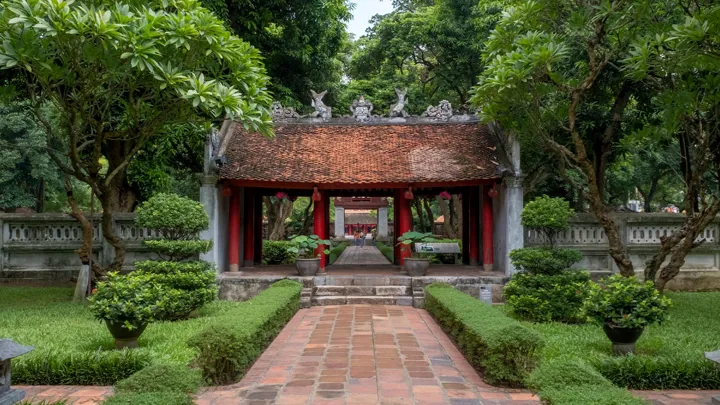
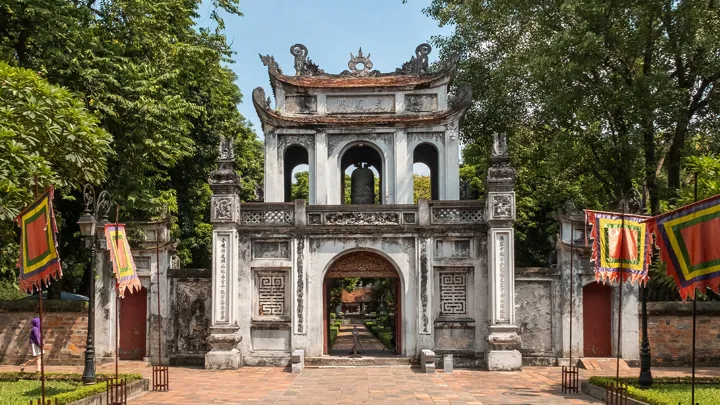
Upon entering the Temple of Literature in Hanoi, visitors pass through the Great Middle Gate into the first courtyard. This spacious garden, lined with ancient trees and manicured lawns, symbolizes the beginning of the scholarly journey. The peaceful atmosphere encourages reflection and detachment from the outside world.
Second courtyard or The pavilion of constellation
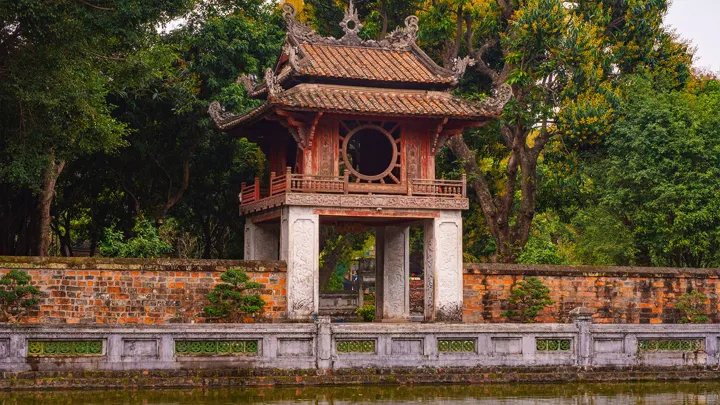
The second courtyard features the iconic Khue Văn Pavilion, an architectural symbol of Hanoi. Elevated on four stone pillars and crowned with a red wooden structure, it represents the brilliance of literature and intellectual achievement.
The Khue Văn Pavilion has become synonymous with the Temple of Literature in Hanoi, appearing on official emblems and cultural representations of the capital.
Third courtyard or The steles of scholars
The third courtyard is often considered the heart of the Temple of Literature in Hanoi. Here stand the 82 stone steles resting upon carved stone turtles, symbols of wisdom and longevity. This space serves as a powerful reminder of Vietnam’s merit-based educational system.
The tranquil lotus pond in this courtyard further enhances the atmosphere of contemplation and balance.
Fourth courtyard or The house of worship
In the fourth courtyard, visitors encounter the main sanctuary dedicated to Confucius and prominent Vietnamese scholars. The interior displays lacquered altars, ceremonial objects, and ancestral tablets.
This sacred space within the Temple of Literature in Hanoi reinforces the spiritual dimension of learning, emphasizing moral virtue alongside intellectual accomplishment.
Fifth courtyard or The imperial academy
The final courtyard houses reconstructed buildings of Quốc Tử Giám. This section illustrates how students once lived and studied within the Temple of Literature in Hanoi. Exhibitions provide insight into traditional teaching methods, examination systems, and scholarly life during imperial times.
Architectural details and symbolism
The Temple of Literature in Hanoi showcases refined Vietnamese architectural craftsmanship. Curved tiled roofs with upturned eaves evoke the shape of a phoenix in flight. Wooden beams are intricately carved with motifs of dragons, lotus flowers, and clouds, each symbolizing prosperity, purity, and harmony.
Red and yellow dominate the color palette of the Temple of Literature in Hanoi, representing luck, nobility, and imperial authority. The balanced symmetry of the layout reflects Confucian ideals of order and discipline.
Every architectural detail contributes to the spiritual and intellectual narrative embedded within the temple grounds.
Cultural relevance in modern Vietnam
Although rooted in the past, the Temple of Literature in Hanoi remains culturally vibrant today. It hosts academic ceremonies, traditional festivals, and cultural performances. Vietnamese students often visit the temple before important examinations to pray for success.
Graduation photos are frequently taken at the Temple of Literature in Hanoi, symbolizing continuity between historical scholarship and modern education.
This living connection between past and present ensures that the temple remains relevant in contemporary society.
Visitor information
For those planning to explore the Temple of Literature in Hanoi, practical details are as follows:
Address: 58 Quốc Tử Giám Street, Đống Đa District, Hanoi
Opening Hours: Daily from 8:00 AM to 5:00 PM
Entrance Fees:
Adults: 70,000 VND
Students and eligible visitors: 35,000 VND
Located in the heart of the city, the Temple of Literature in Hanoi is easily accessible by taxi, bus, or motorbike. Visitors are encouraged to dress modestly, as it remains a site of cultural and spiritual significance.
Experiencing the Temple by day and evening
Visiting the Temple of Literature in Hanoi during daylight hours allows guests to fully appreciate its architectural details and garden landscapes. Morning light gently illuminates the stone steles and wooden structures, creating ideal conditions for photography.
In contrast, evening visits offer a quieter and more contemplative ambiance. Soft lighting enhances the mystical quality of the courtyards, transforming the Temple of Literature in Hanoi into a serene sanctuary away from urban noise.
The surrounding cultural corridor
The location of the Temple of Literature in Hanoi places it near several other important landmarks. Within walking distance are Hoàn Kiếm Lake, St. Joseph’s Cathedral, and Hanoi’s Old Quarter.
This proximity allows visitors to combine their exploration of the Temple of Literature in Hanoi with a broader cultural itinerary, gaining a comprehensive understanding of the capital’s layered heritage.
A journey through time
To walk through the Temple of Literature in Hanoi is to embark on a journey across centuries. Each courtyard reflects stages of intellectual growth, from preparation and dedication to achievement and wisdom.
The site embodies the idea that knowledge is sacred and that education shapes national identity. Through wars, dynastic changes, and modernization, the Temple of Literature in Hanoi has remained a steadfast symbol of enlightenment.
The temple of Literature in Hanoi
The Temple of Literature in Hanoi is not merely an ancient monument, it is a living embodiment of Vietnam’s scholarly spirit. Its five courtyards, stone steles, sacred altars, and elegant architecture collectively narrate a story of perseverance, respect for learning, and cultural continuity.
Whether you are a history enthusiast, architecture admirer, or traveler seeking meaningful cultural experiences, the Temple of Literature in Hanoi offers profound insight into the intellectual foundations of Vietnam.
Standing gracefully amid the vibrant city, the Temple of Literature in Hanoi continues to inspire generations, reminding us that true wisdom transcends time and that the pursuit of knowledge remains one of humanity’s greatest endeavors.
Read more :


